
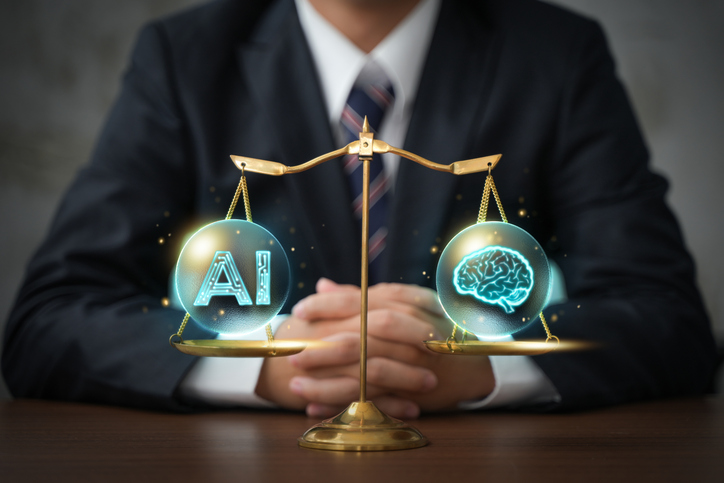
Artificial Intelligence (AI) has rapidly become a common part of the hiring process for many employers. AI-powered tools screen resumes, review cover letters, and even predict the performance of prospective employees. The goal is to help hiring managers make quicker and better decisions. However, quicker doesn’t always mean better, or legal, as AI can expose companies to significant liability.
Recent litigation surrounding AI hiring platforms, including a 2026 class-action suit filed in California, highlights the problem: just because a tool is powered by advanced technology and operates autonomously does not exempt it from legal compliance requirements. Employers who use AI systems as end-to-end solutions for their hiring process without oversight may expose themselves to lawsuits under the Fair Credit Reporting Act (FCRA).
AI Hiring Tools and the FCRA
At the center of the issue is how AI tools collect, analyze, and use prospective candidates’ data. Many platforms aggregate information from multiple sources, including social media profiles, employment and education history from resumes, and various internet findings on an individual. Those tools then generate scores or rankings that predict a candidate’s suitability for a role.
That process sounds strikingly similar to what traditional consumer reporting agencies do: gather information from multiple sources to relay information to potential employers. Because of this similarity, plaintiffs in recent lawsuits argue that certain AI hiring tools effectively function as consumer reporting agencies under the FCRA and should be held to the same laws.
If courts agree, the implications are significant. The FCRA imposes strict requirements on employers who use consumer reports for employment purposes, including:
- Providing clear disclosure to candidates
- Obtaining written authorization from candidates
- Offering pre-adverse action notices to candidates
- Allowing candidates to dispute inaccurate information
Many organizations using AI tools today don’t follow these steps, largely because they don’t view AI-generated data for hiring new employees as consumer reports. That assumption is now being tested in court, and it may not hold up.
Beware the Black Box of AI
AI decision-making tools raise legally significant questions: How is data input? How is data collected? How are employee profiles/rankings/scores built? How are decisions generated? Do the AI hiring tools use a ranking system based on candidate data found on the internet? Is there human oversight or intervention in the process?
It’s critical for employers to understand and answer these questions before using AI tools. The answers can determine whether the AI tool is generating a consumer report that’s subject to the FCRA.
For example, say a candidate with a common name applies to a position with a company that uses an AI-powered candidate-ranking system. If the AI system identifies a criminal record or derogatory news article, and attributes it to the candidate, how does the system ensure the record doesn’t belong to a different person with the same name? If the AI system ranks a candidate lower because of a negative finding and an employer subsequently disqualifies the candidate solely based on the low ranking, this would be a clear FCRA violation. The potential liability is huge.
In the quest for greater efficiency, organizations need to apply oversight and scrutiny to AI tools. If an AI tool is used to make employment decisions, the employer remains accountable for how it operates and whether it complies with the law.
Keep in mind that, under the FCRA, legal obligations are triggered not by intent, but by function and process. If a tool is effectively producing a consumer report, it doesn’t matter how the data is labeled or generated; the report must comply with the FCRA.
AI: A Support Tool, not a Decision Maker
AI tools should be used with caution and should not replace human involvement. Granting AI free rein within an organization creates risk. Algorithms lack the understanding and legal awareness required to navigate complex regulations under the FCRA. They cannot exercise discretion or ensure procedural compliance as trained professionals can.
Human oversight remains essential, not just as a safeguard, but as a core component of a compliant operation. Experienced investigators/researchers are needed to:
- Verify the accuracy of information
- Interpret results in context
- Ensure compliance with FCRA/state-level reporting restrictions
- Handle disputes and corrections
Implement AI Tools with Caution
The recent lawsuits should serve as a warning. AI systems can be helpful tools, but not when used unchecked. Even if the plaintiffs in current lawsuits don’t prevail, other lawsuits are sure to follow. Blind trust in AI tools, or a lack of understanding of how they work, can expose companies to major liability. (And possibly result in the rejection of promising candidates under false pretenses).
Companies that want to benefit from AI should take a measured approach:
- Conduct thorough due diligence on vendors and systems
- Understand how data is sourced and utilized
- Evaluate whether outputs could be considered consumer reports
- Build compliance procedures that align with FCRA requirements
- Maintain human oversight at every stage of the hiring process
The bottom line is simple: New innovation does not eliminate the need to comply with existing laws and responsibilities. As AI continues to expand and evolve, so, too, will the legal expectations regarding its use.